LONGDE / "Longde Hardware" Production Workshop
Factory Tour
Inside the Longde factory
from raw alloy to finished hardware
When customers visit the factory, they are concerned about whether the equipment is on-site, whether the production processes are connected, and whether there is someone responsible for managing the materials. At "Longde Hardware", the raw materials, mold-making, die casting, grinding, assembly, quality inspection, and storage all take place within the factory. By following the production sequence, one can see which areas a decorative buckle goes through from raw material to finished product.
View by region belowOn-site photography in the factoryRaw materials / Mold making / Die casting / Surface treatment / Assembly / Quality inspection
AREAS / Workshop Areas
Nine regions, arranged in production order.
- 01Entrance
- 02Ingredients
- 03Model room
- 04Die casting
- 05Sprues
- 06grinding
- 07assembly
- 08Quality Inspection
- 09Warehousing
The workshop is divided into different processes. Materials go through processes such as raw material preparation, die casting, grinding, assembly, and finally quality inspection and storage, reducing the need for back-and-forth transportation.
01Factory Entrance
Entering the door leads to the production area, where materials and personnel come in and out.
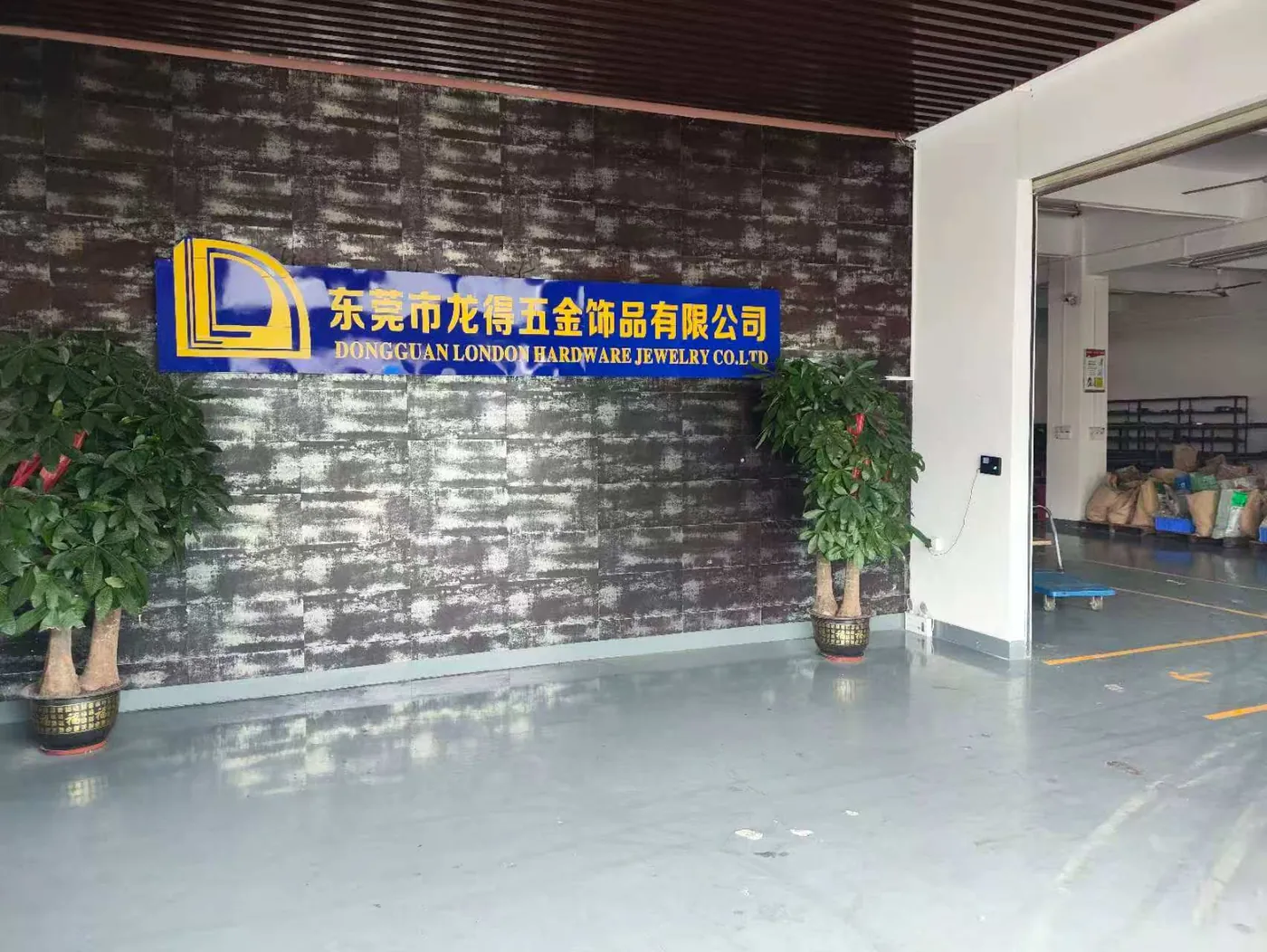
The factory entrance is also the first node where materials are brought in and out. When customers arrive at the factory, vehicles park, materials are transported in and out, and personnel go on duty. The order at the entrance can reflect the daily management status of the factory.
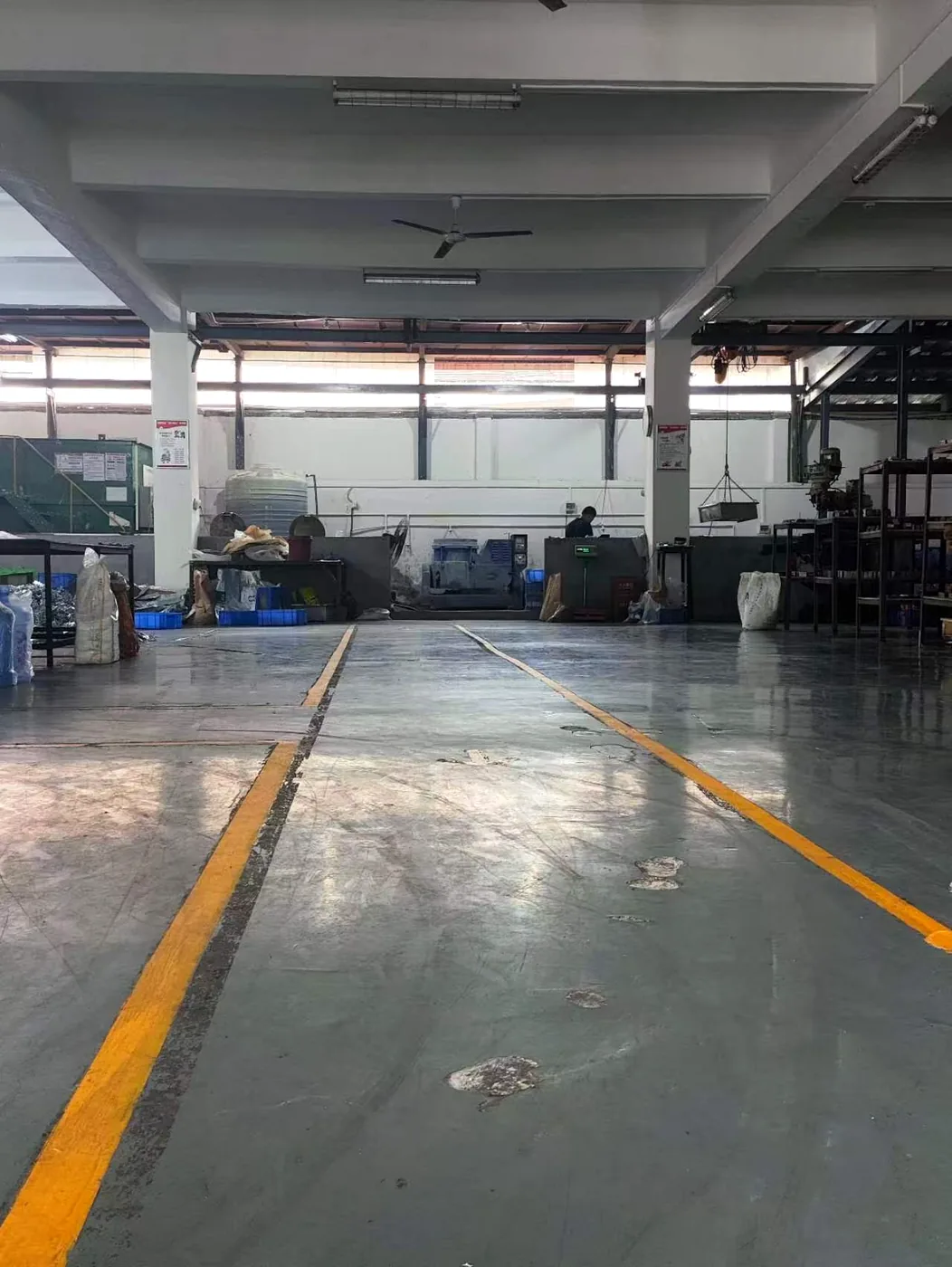
The main passage after entering the door divides the workshop into two sides: one side is used for storing raw materials and materials to be processed, while the other side is equipped with equipment and work areas. The passage is wide enough for carts and transfer baskets to pass through simultaneously; the floor is marked with yellow lines to delineate different areas, ensuring that materials do not occupy the path, and providing designated areas for personnel movement and loading/unloading.
Entrances and passages are just the beginning. The classification of raw materials on both sides of the passage, the operation of equipment, and the identification of semi-finished products can better reflect the actual production situation of the factory.
02Raw Material Warehouse
Raw alloy and cast blanks are stored in separate areas.
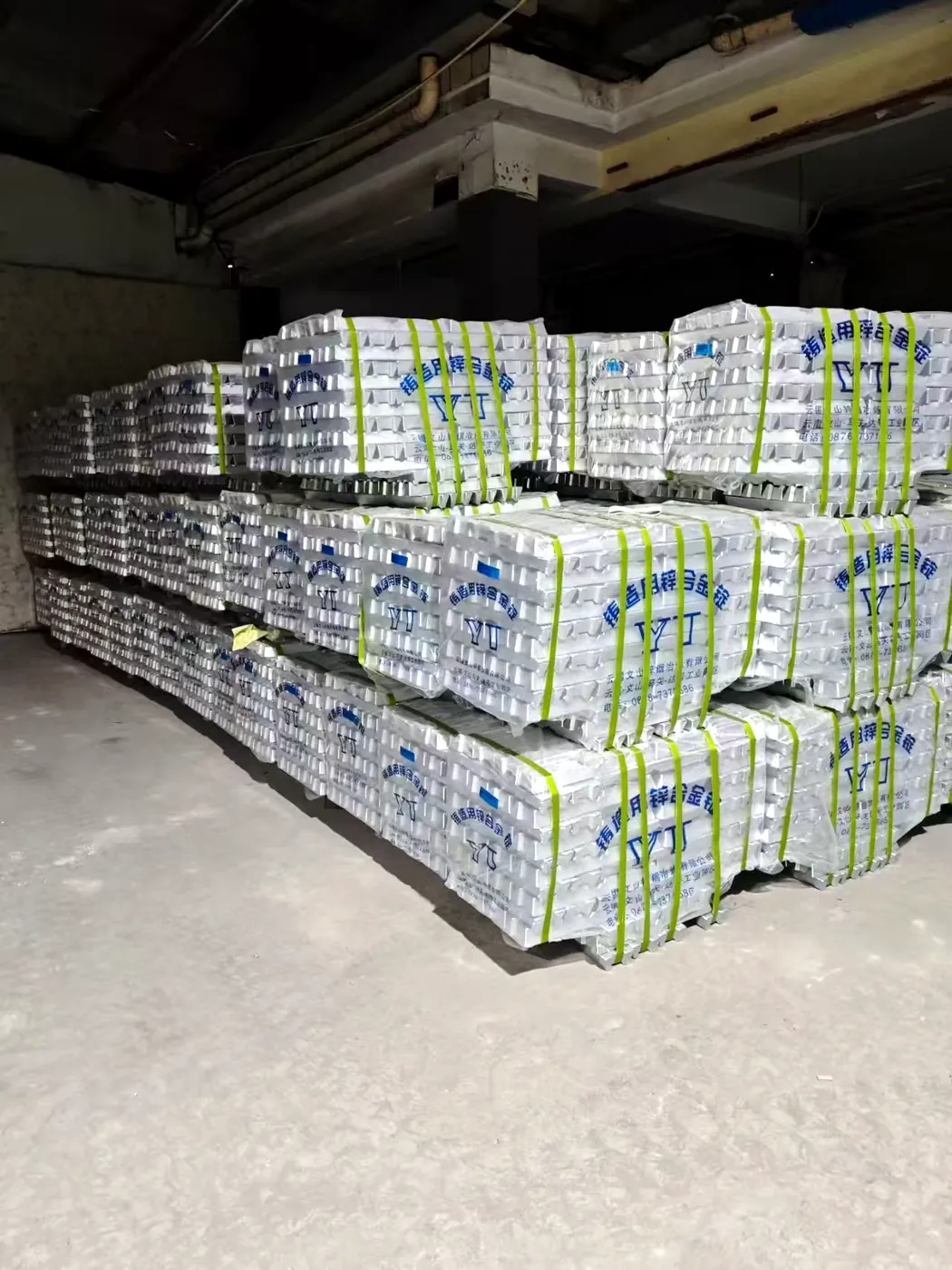
Die cast zinc alloy ingots are stored in stacks in the raw material area. After unpacking, they are transported to the die casting process. The grade and composition of the zinc alloy affect the fluidity, surface quality, and subsequent electroplating effects of the die casting. It is necessary to avoid mixing different grades of materials during storage.
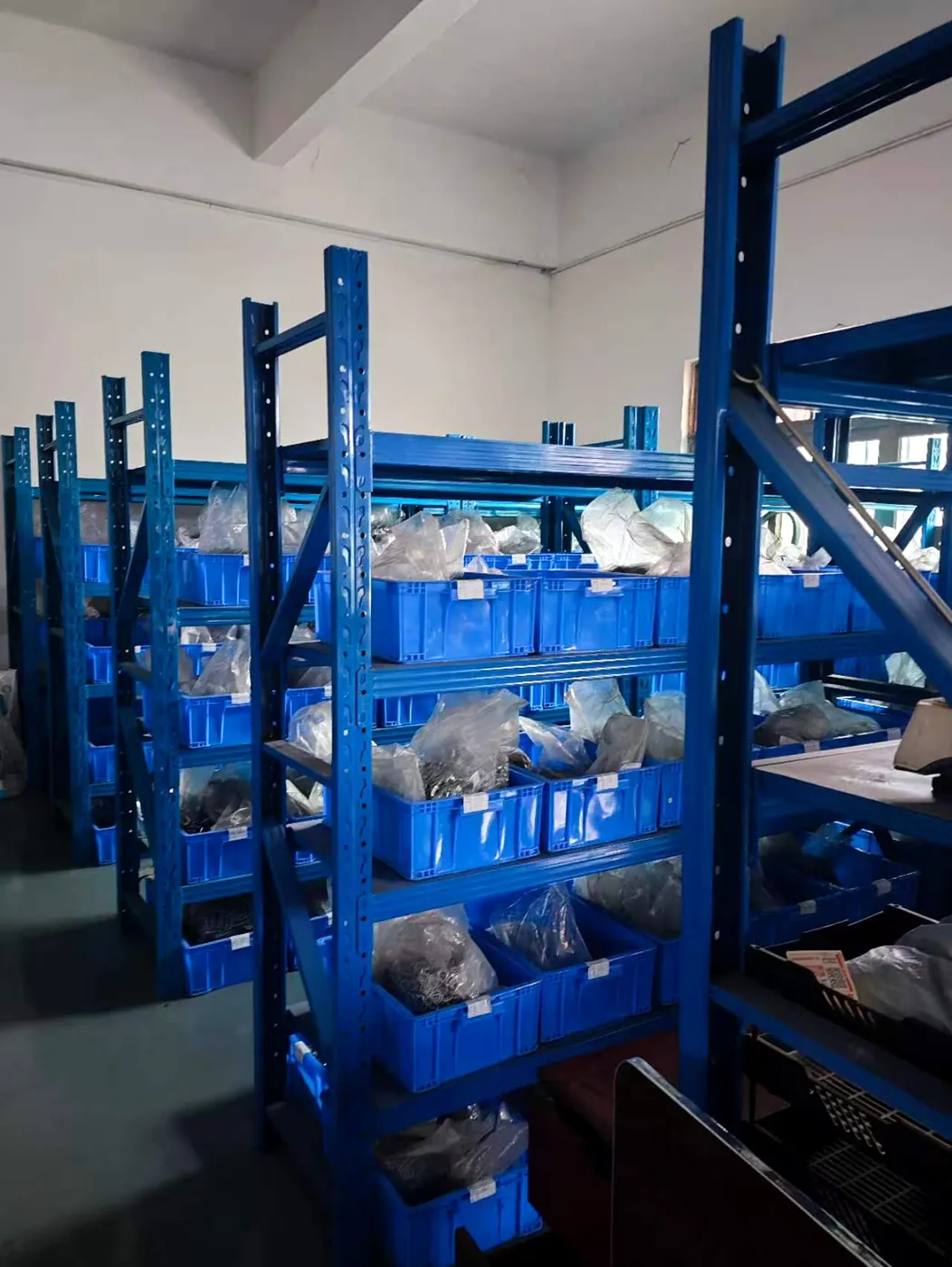
As-cast blanks go into totes and then onto shelves by style. Raw alloy and blanks have separate areas for die casting and later operations. That makes parts easier to find and reduces the risk of mix-ups.
Each tote of blanks is labeled with the style or part number so workers can find the right parts for tumbling, assembly and repeat orders.
The management of the raw material storage is not complicated, but it affects two aspects: whether the materials are stable during die casting, and whether the same type of raw materials can be quickly obtained when needed.
03Mold room and molds
Molds are made in the factory, and also repaired in the factory.
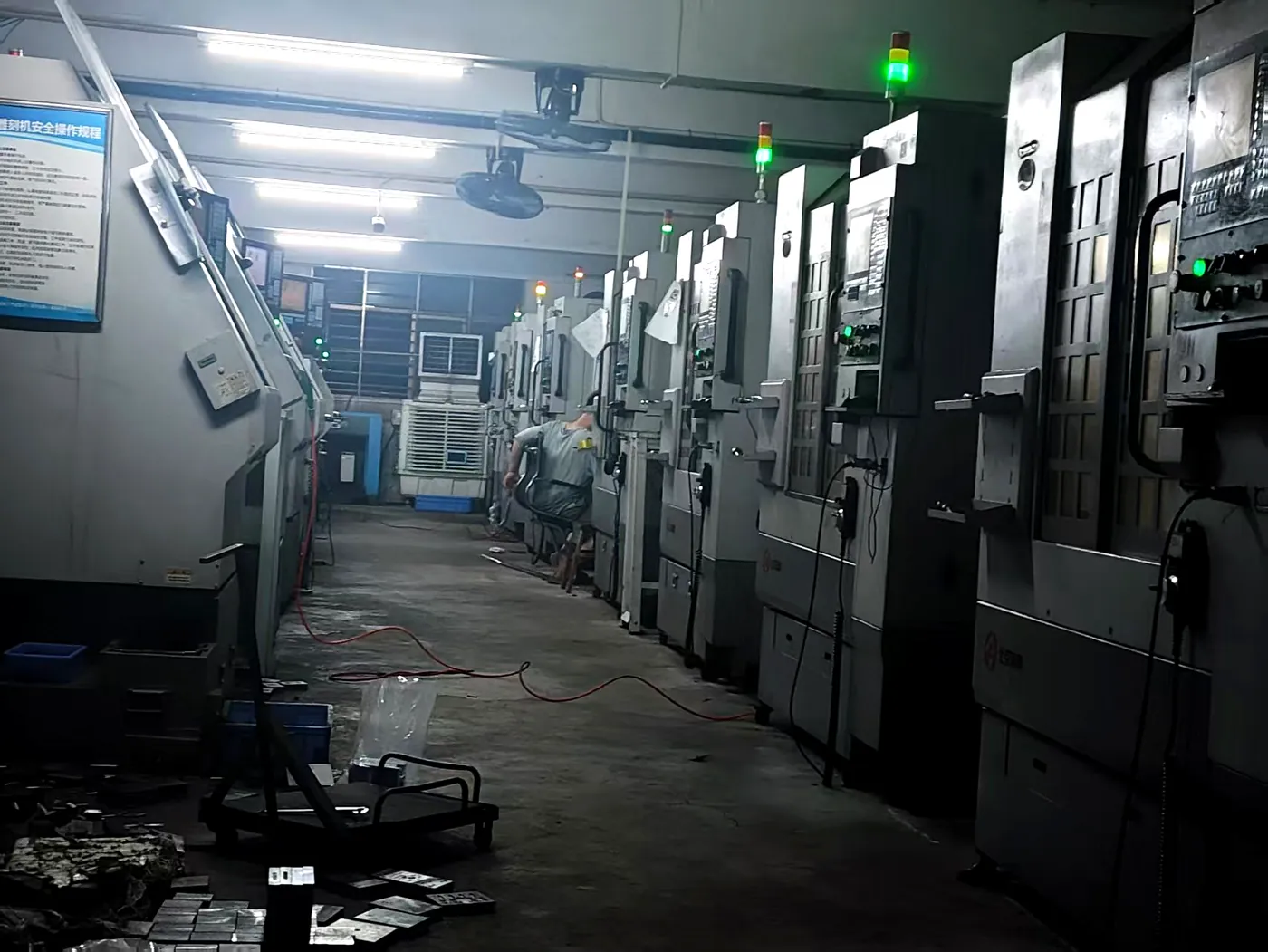
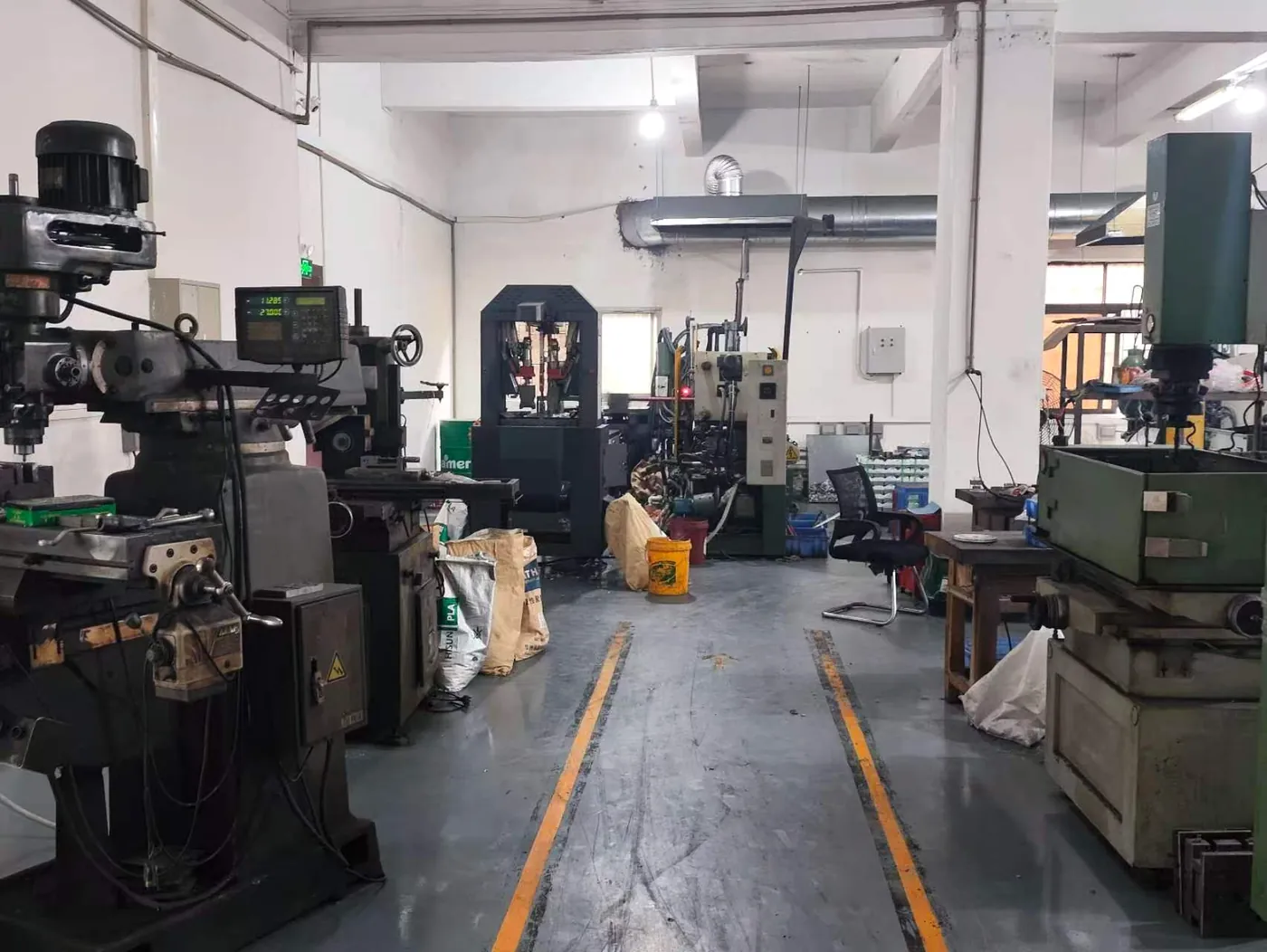
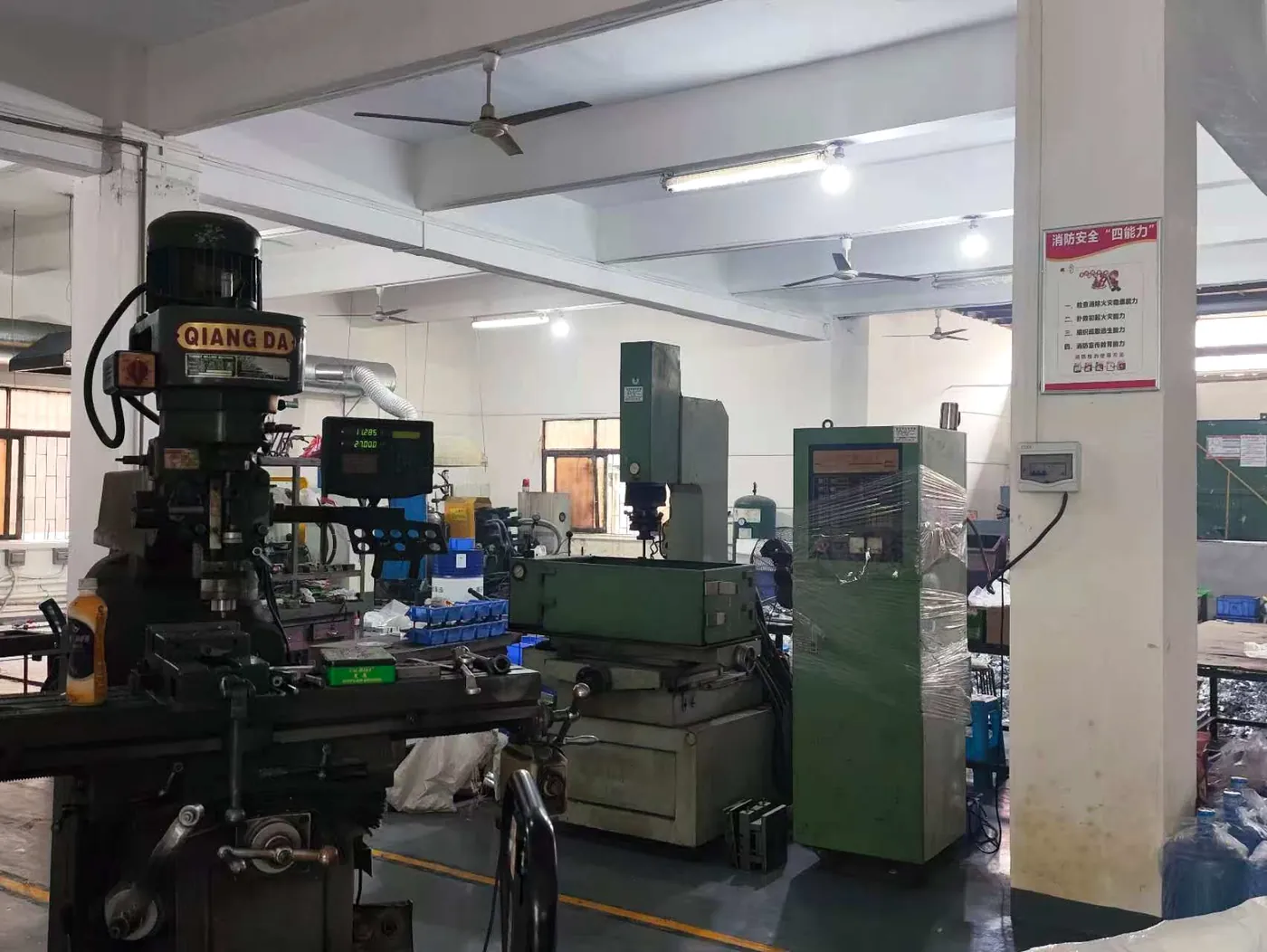
The mold determines a clasp’s shape, dimensions and surface detail. Longde machines and repairs steel molds in-house. CNC engravers, mills, electrical discharge machines and drill presses let us make, modify and repair molds in one shop.
CNC engraving machines cut and finish the cavities. Electrical discharge machining reaches tight corners and small details. Mills and drill presses are used for mold bases, inserts and repairs. The shop can handle the work from rough machining to fitting the mold halves.
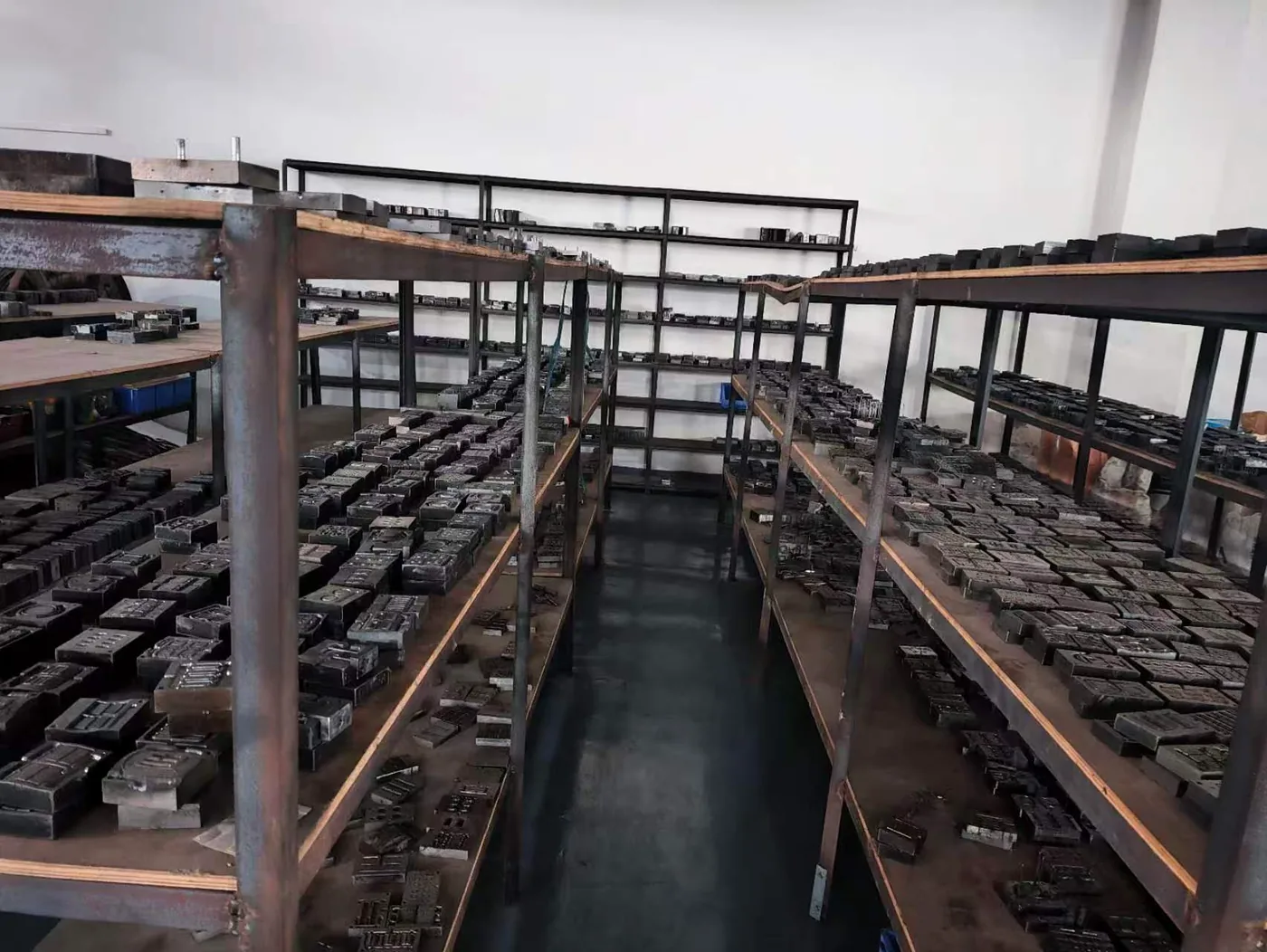
The mold room stores used steel molds, which are arranged on shelves. It indicates which styles and structures have been made, and these items remain on the shelves. When reviewing orders or making changes to designs, the factory can retrieve old molds for comparison to determine whether it's necessary to repair or remold the molds, thereby reducing the time required for remolding.
The mold room is arranged compactly according to the type of equipment. Mold workers can move between several machines with short distances. If problems are found during mold testing, they can return to the mold room for immediate handling.
04Die casting
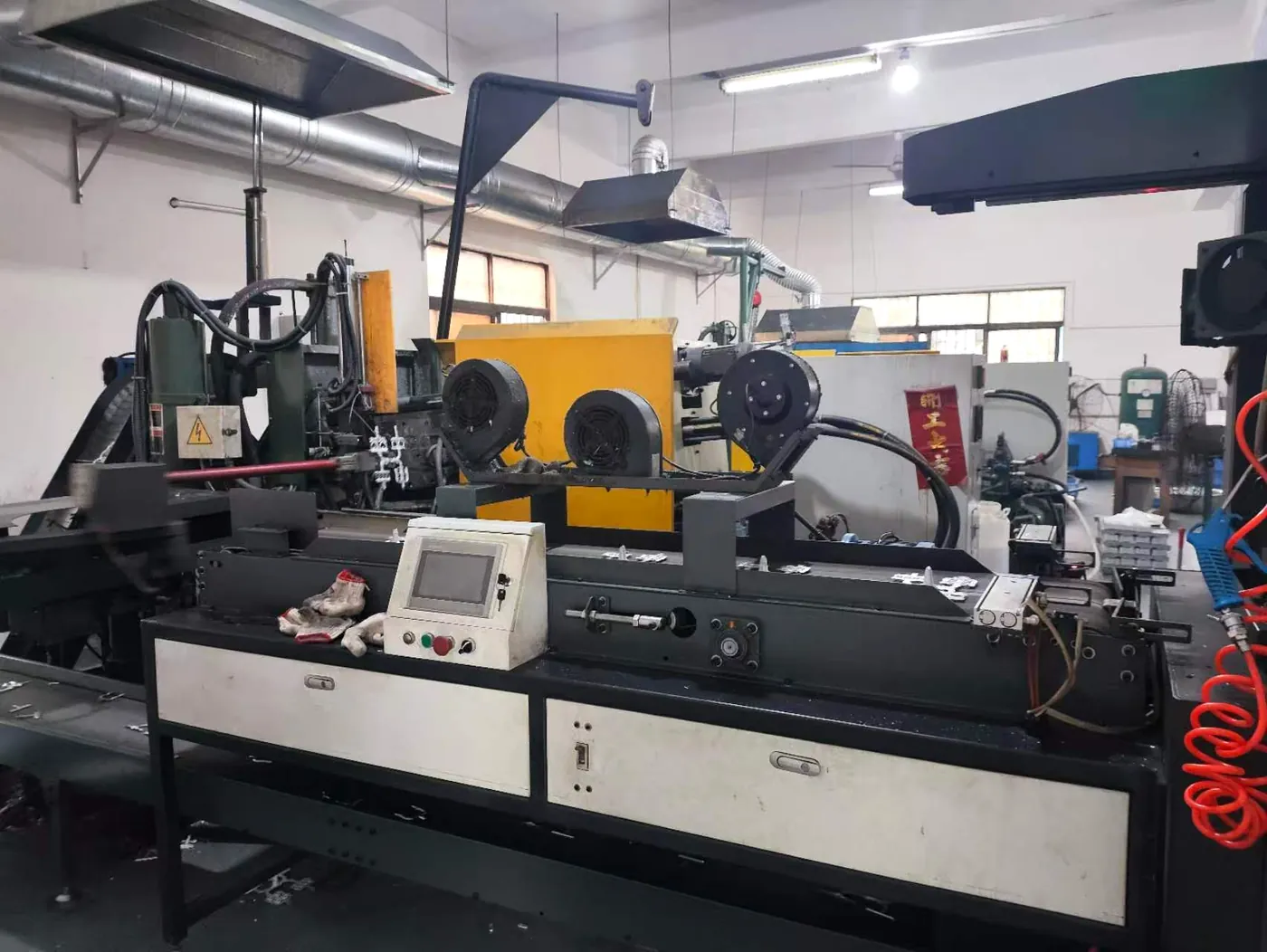
The mold goes into the machine and the blanks come out attached to the sprue.
Die casting refers to the process of injecting zinc alloy liquid into a steel mold cavity. After cooling, the finished parts are obtained. After the mold is set up and trial molding is completed, the appearance and dimensions are confirmed, and then continuous production begins.
Die casting determines the surface condition of the blank. Whether the surface is bright, free of water marks and sand holes can be seen at the blank stage. The stability of material temperature, mold temperature, and injection parameters directly affects the yield rate of subsequent grinding and electroplating processes.
In the die casting area, automated die casting machines are used. The adjustment of parameters and handling of exceptions are the responsibility of the on-duty personnel. When the equipment is operating continuously, the temperature near the molds and material pipes is relatively high. The workshop uses top exhaust ducts to remove the hot air.
The quality of die casting is not solely determined by the equipment's tonnage. The density of the mold parts, their dimensional stability, and surface defects all affect the amount of rework required in subsequent processes, as well as the strength of the final product.
05Sorting and sprue removal
How the sprue is disengaged can affect the edge and surface of the decorative fastener.
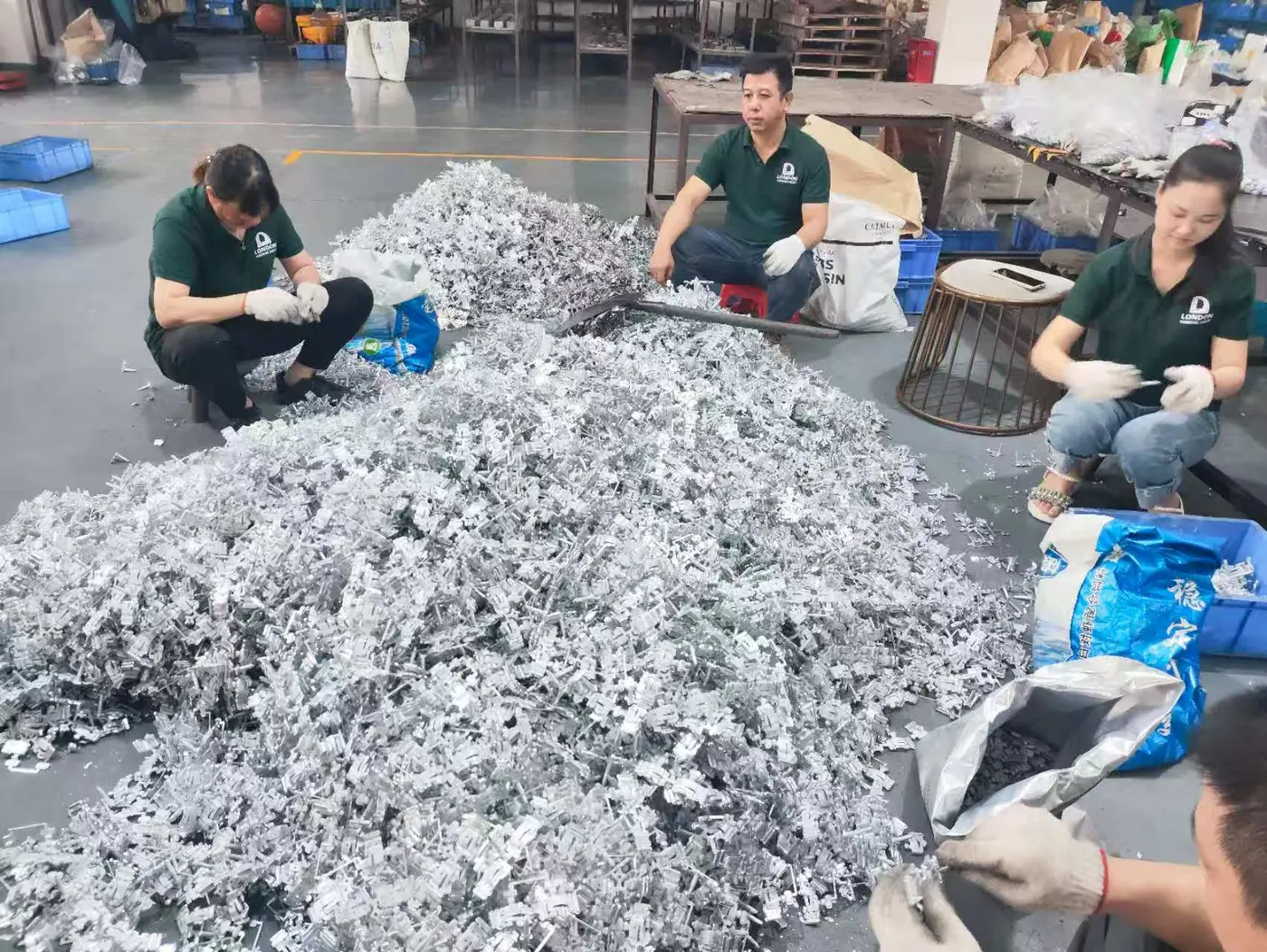
After die casting, the blanks are still connected to the sprue and runner. The method of removing the sprue can affect the edge and surface of the decorative fasteners. The factory uses manual operation to separate each piece individually.
Manual separation is slower than machine trimming, but it gives the operator control over the force. Excess force can deform the clasp. Too little can leave sprue material that takes extra time to remove during finishing. Workers also sort out visibly defective blanks before they move on.
This process requires proficiency. With a large number of blanks and similar shapes, workers must quickly identify the sprue locations and surface defects among a pile of blanks, while also controlling the force applied with their hands.
For large quantities of blanks, it is convenient to spread them out for sorting, allowing for individual inspection and packaging. The sprue and finished products are packed in separate bags to prevent mixing. The effectiveness of sorting directly affects the uniformity and surface quality of the subsequent grinding process.
06grinding
Grinding removes burrs on the mold lines and edges, preparing the surface for further treatment.
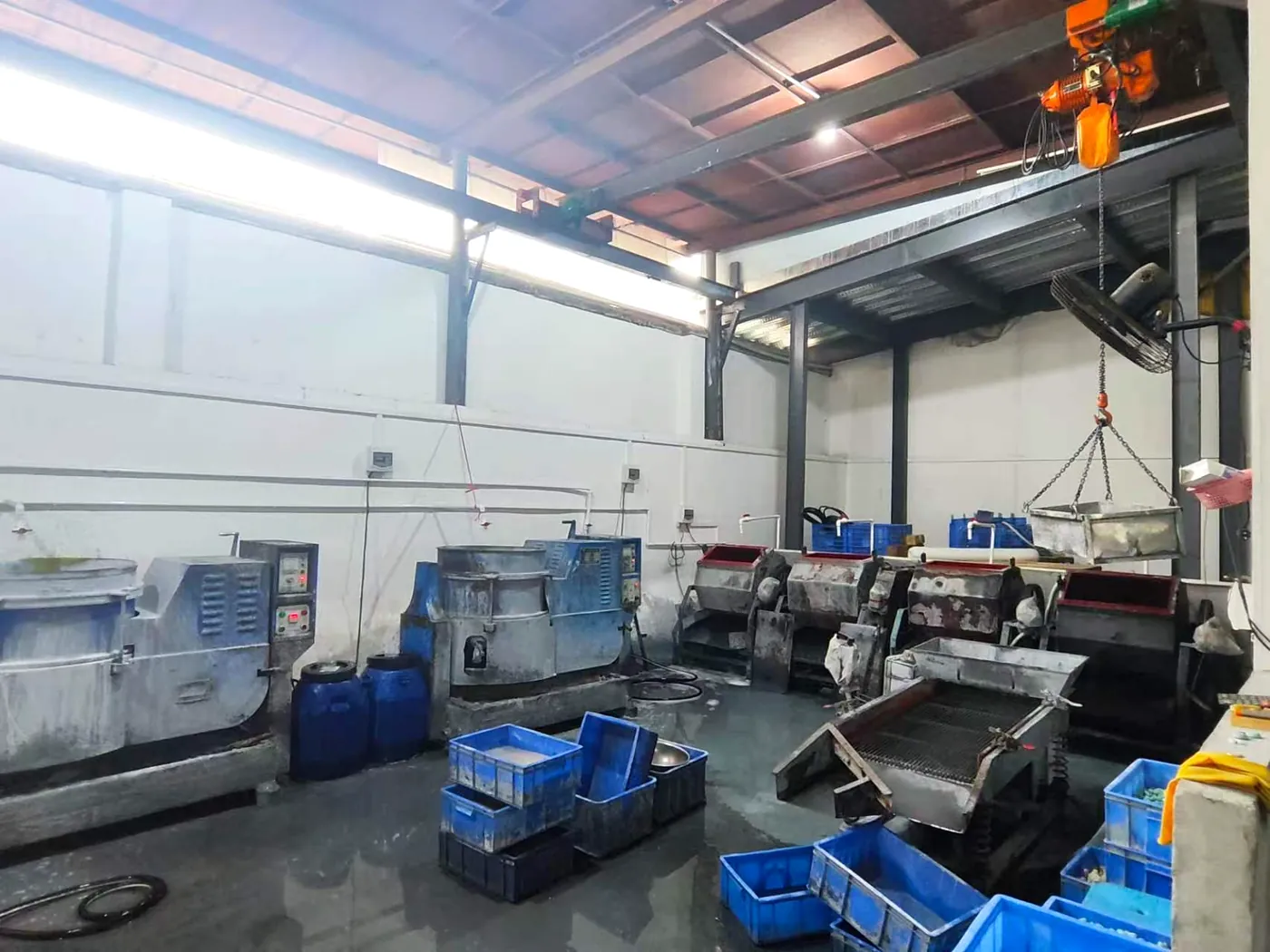
Grinding treatment reduces the burrs on the die casting lines and edges. A roller is filled with grinding stones, grinding fluid, cleaning agent, and water. The blank comes into contact with the abrasive during rolling, gradually making the edges smoother.
The size of the grinding stones and the grinding time are adjusted according to the product. For decorative buttons with fine structures and high surface requirements, too long a grinding time can damage the details; if the time is insufficient, the joining lines cannot be removed. This process relies on experience as well as the comparison of samples.
Grinding is a wet process. The workshop floor is kept moist all the time. Equipment and transfer boxes are managed in the wet area. The ground parts must be cleaned thoroughly to prevent grinding fluid and abrasives from being carried to subsequent processes.
The grinding area is lifted by an electric hoist to transport the hopper filled with the blanks, reducing the need for manual handling. Grinding determines the feel of the decorative button edges and also affects the surface smoothness before electroplating. Uneven grinding can lead to wavy patterns or pitting after electroplating.
07Manual assembly
Springs, fasteners, and connectors are assembled at small workstations.
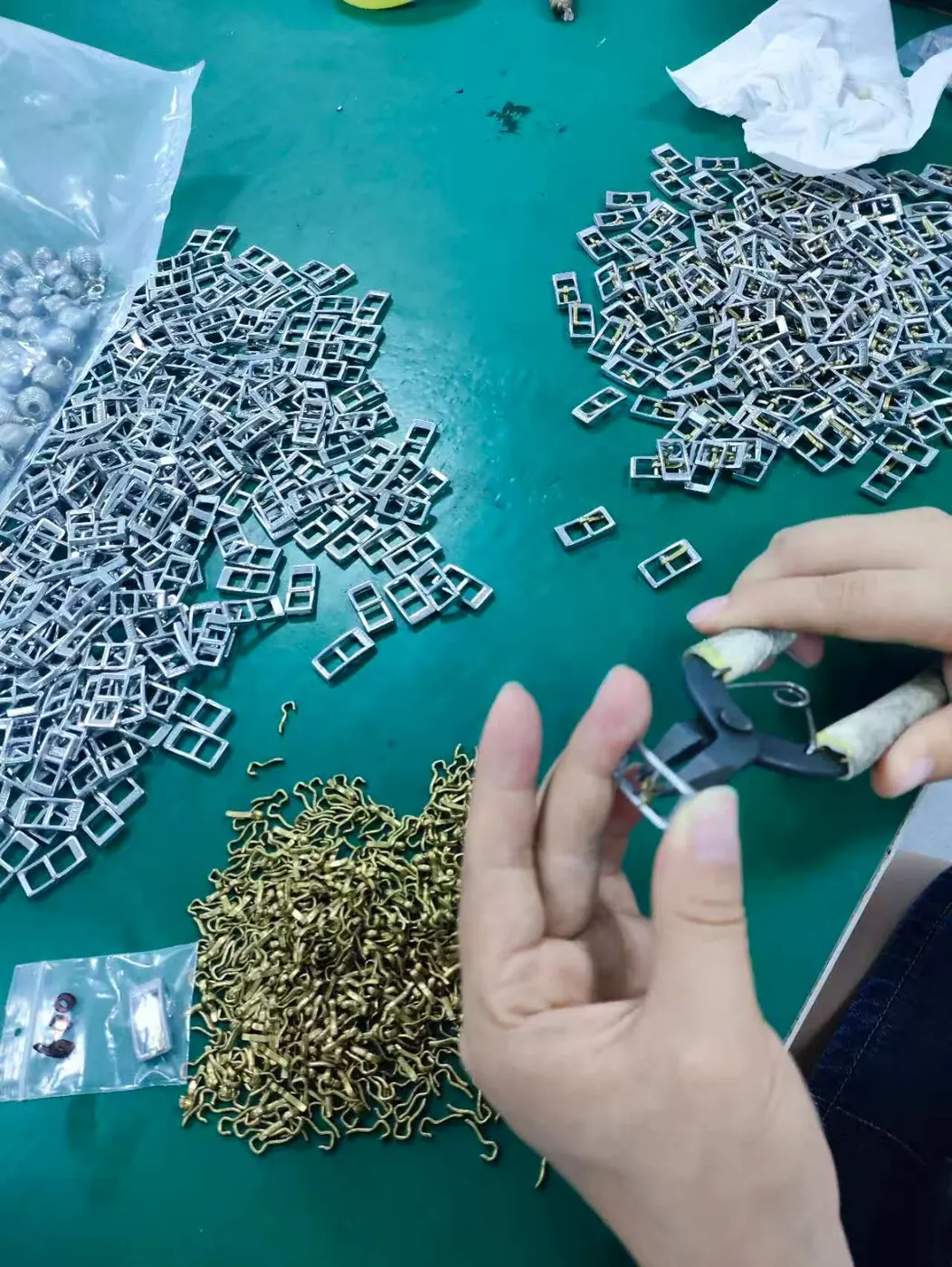
Some decorative buckles consist of multiple parts. Springs, fasteners, and connectors need to be assembled at the assembly station. Due to the limited assembly space, it is easy for the parts to be installed in the wrong direction. Currently, this process is completed manually.
The assembly process is not fast, but the variety of products is flexible. With the same workbench, by changing the materials and tools, different combinations of components can be used. This arrangement is more suitable for small batches and multi-style orders.
During the assembly process, workers will manually check whether any parts are missing and whether the springs are in place. The assembly quality affects whether the finished product can open and close properly and whether the force is evenly distributed. The factory places these assembly parts at manual workstations and arranges personnel in batches according to the orders.
These workstations do not have automated equipment; they rely on pliers, parts boxes, and the hands of workers. The value of manual assembly lies in the ability to perform tasks in small batches, and there is no need to reprogram the equipment during model changes.
08Quality Inspection
Surface, structure, and function are inspected individually in separate areas.
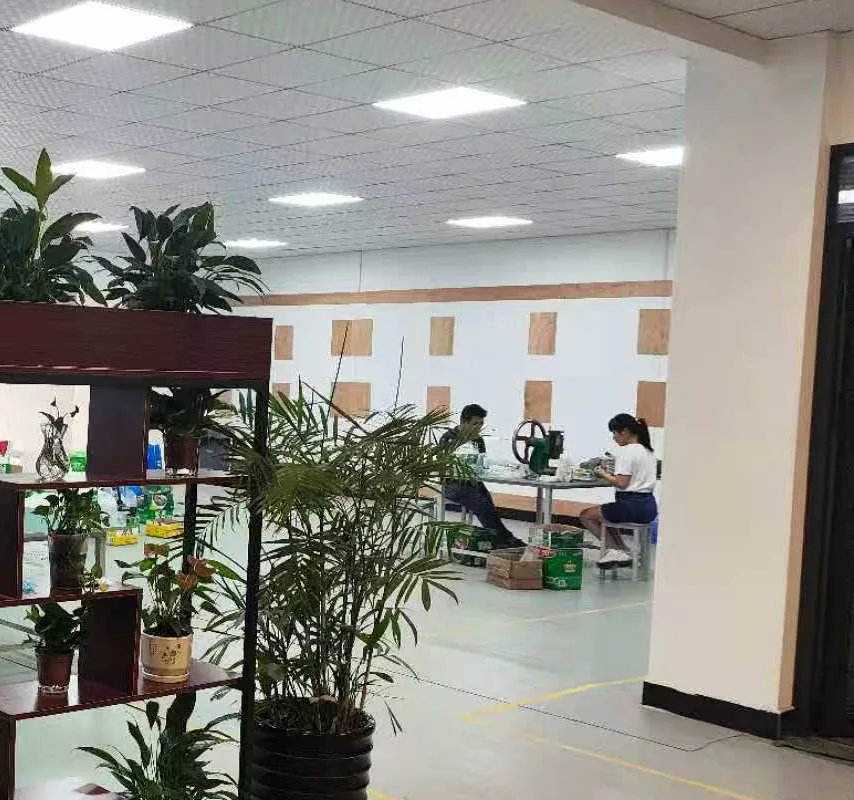
The inspection area is located in the middle of the workshop. There is a row of green plants at the entrance, and the workbench is on the inner side, separated from areas where die casting and grinding processes occur, which are prone to oil and moisture. The items to be inspected are laid out on a long table, and workers examine each item's surface and structure.
The inspection includes checking for surface scratches, electroplating bubbles, structural integrity, and functional status. When defective products are found, they should be separated by defect type for easier subsequent repair or disposal.
The inspection area is illuminated with white light, and the work surfaces are kept clean. Small scratches and color differences are more easily noticeable. The checked fasteners are placed separately according to the results, to prevent good products from being mixed with defective ones.
Quality inspection is conducted at the end of the production process. Its role is to identify issues with the surface and functionality, preventing problems from being discovered only when the entire batch reaches the customers. The factory uses manual inspection for each individual item, and any issues are handled within the factory.
09Sample Room and Warehouse
Samples, raw materials, and packaging are stored separately. All order processing and shipment procedures start from here.
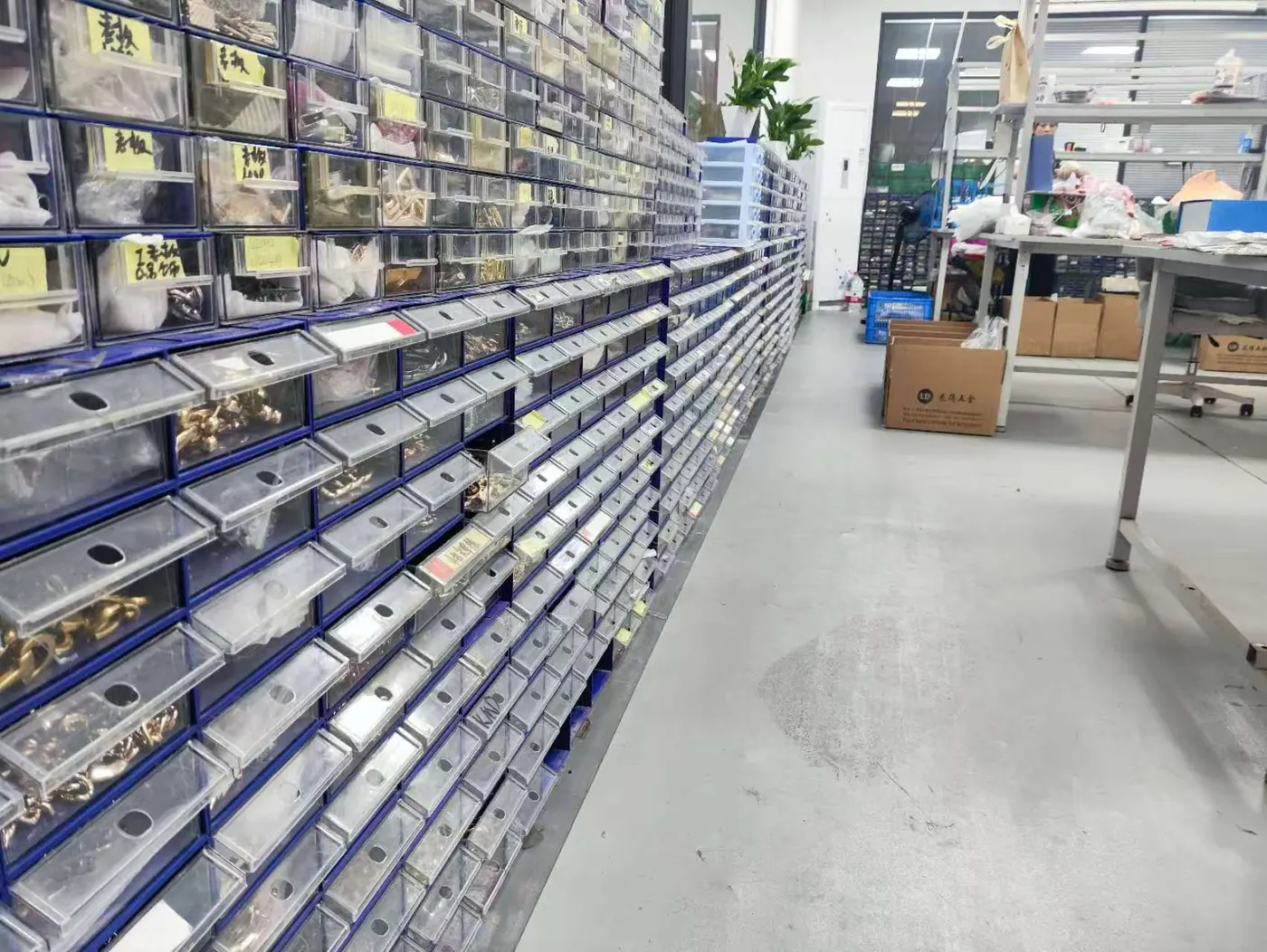
The sample room stores decorative buttons, chains, and accessories by style. There are handwritten labels on the outside of the boxes. When reviewing samples or developing similar styles, the sample room serves as the most direct reference within the factory.
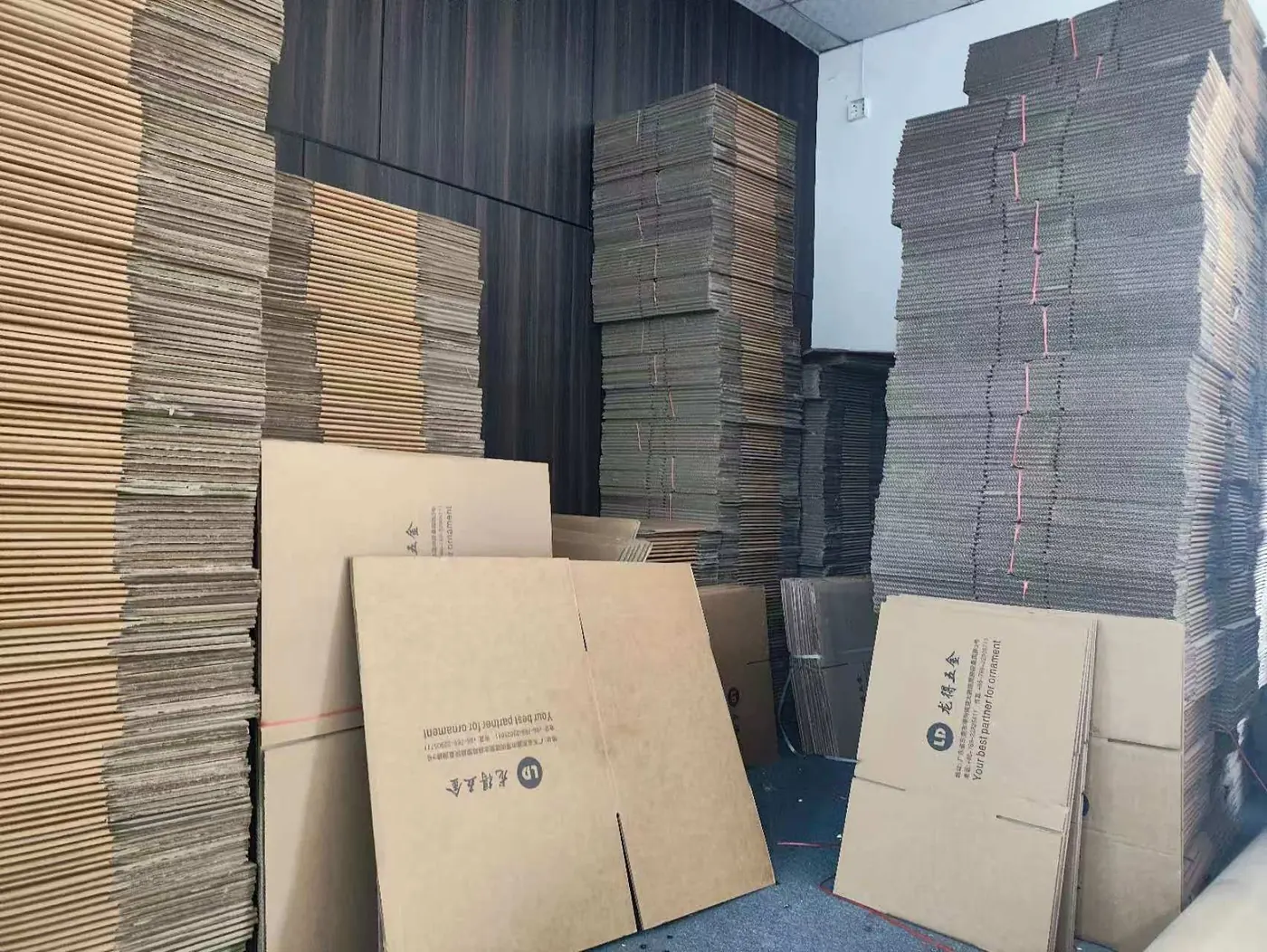
The semi-finished products after die casting are stored in the material bin. The transfer boxes are stacked layer by layer and separated by style. The finished cartons are stored in the packaging material area. The cartons are printed with the company's logo, and different sizes are stored separately.
Samples, raw materials, and packaging are stored separately. They can be retrieved by region before being shipped. The warehouse does not directly participate in processing, but it affects the speed of replenishment, order processing, and shipment.
Whether there are references between sample rooms and warehouses, and whether the packaging can keep up during shipment.
Updated:
What can be confirmed by visiting the factory and the workshop?
Look at the workshop, focusing on whether the equipment is running, whether the processes are continuous, and whether there are labels for materials and semi-finished products. The area of the factory building and its decoration do not indicate these aspects.
The raw materials, molds, die casting, grinding, assembly, quality inspection, and storage for "Longde Hardware" are all located within the factory. Customers can check each stage of the production process in sequence upon arrival at the factory.
If you need to check a certain process, surface treatment, or type of structure, you can bring the drawings and quantity. For more detailed process instructions, please refer to...Metal Hardware Production Process.
NEXT / Continue to learn more
Want to verify a certain process or equipment?
Please bring the drawings, quantity, and surface requirements. We will respond based on the actual situation.
Contact & Quotes