LONGDE / "Longde" Metal Hardware Production Process

Real production process of metal hardware accessories

From drawing to production
How we make metal clasps

The luster and texture of a decorative buckle come from a series of specific processes. From steel molds and die casting to grinding and electroplating, following real process photos, you can see the gradual formation of metal hardware.

Look down along the process
Actual photos of the process

Molding / Surface finishing / Electroplating protection / Quality inspection and packaging

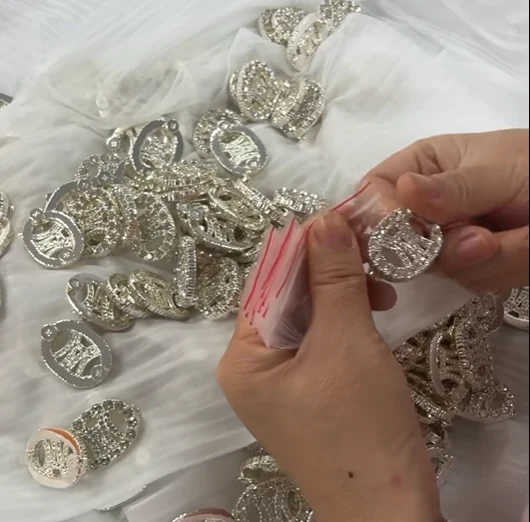
Staff members are inspecting silver-colored accessories, with similar accessories and packaging materials placed on the tables.
The final check on details · Quality inspection
THE MAKING OFA piece of hardware buckleShape / Surface / Function

PROCESS / Production Process

Nine steps, connecting the process of making a decorative buckle.

  1. 01Drawing confirmation
  2. 02Steel mold manufacturing
  3. 03Die casting
  4. 04Sorting and sprue removal
  5. 05Grind off burrs.
  6. 06Polishing and finishing
  7. 07Handcrafted
  8. 08Electroplating and Protection
  9. 09Quality Inspection Packaging

The processing methods and surface treatment requirements for different styles shall be confirmed according to the product plan.

01Drawing confirmation

First, confirm the shape, then let the mold rest on the ground.

Confirming the dimensions, size, and shape is the starting point for "Longde Hardware" to enter the steel mold manufacturing process.

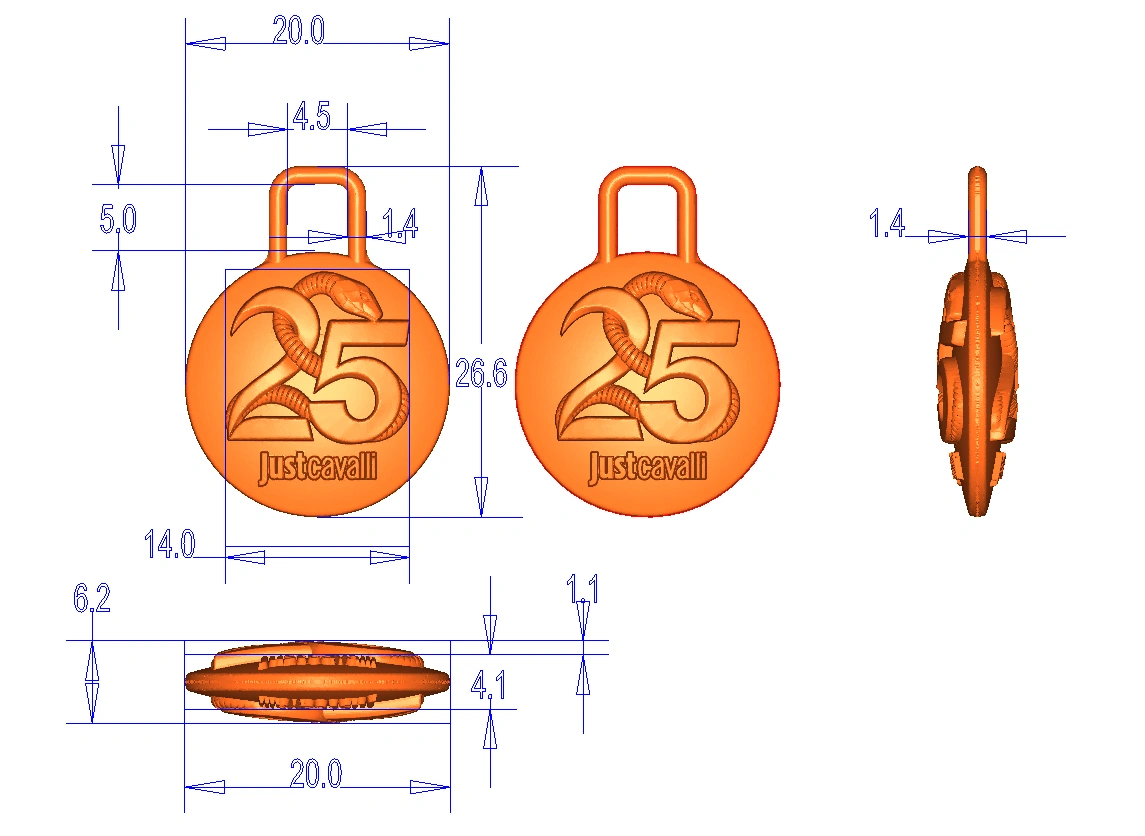
Production begins with the confirmation of the drawings. First, we confirm the contour, dimensions, and structure of the decorative buckle with the client. Then, we proceed to the subsequent mold-making process, ensuring that the design on the drawing has a clear basis for processing.

contour
Confirm the appearance shape
Size
Confirm the size and thickness
Structure
Verify the relationships between various parts
Front, side, and thickness views of the round pendant, with dimensions marked for the contour, hanging loop, and thickness
Sample confirmation of drawings · Contour, dimensions, and structure

02Steel mold manufacturing

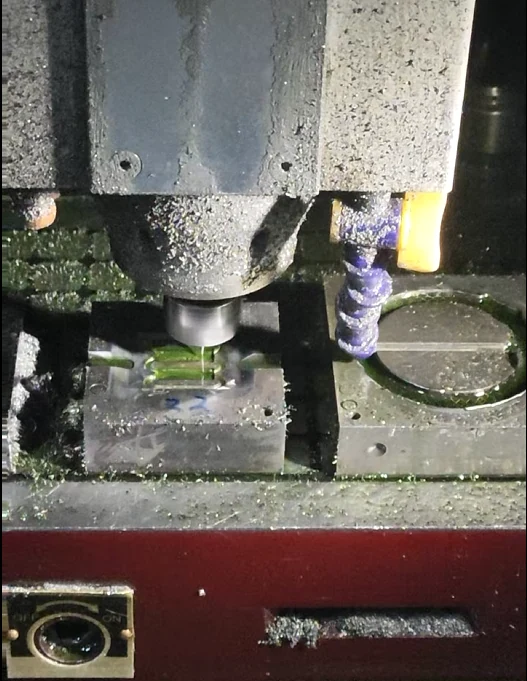
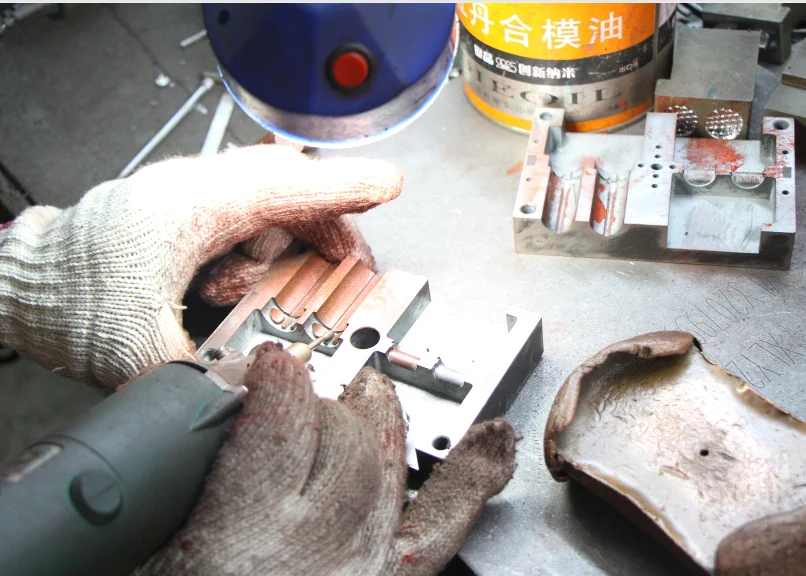
Engrave the cavity, cut channels, fit the mold and polish it.

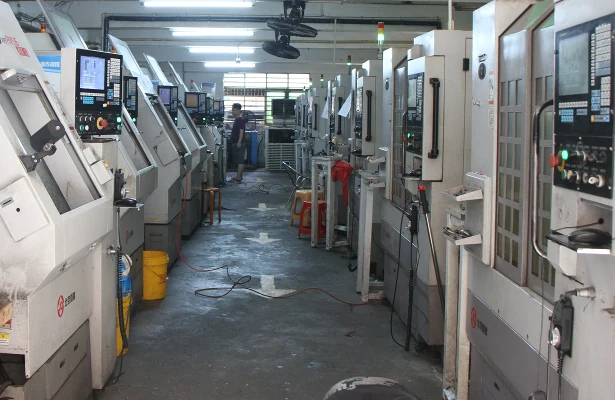
Once the drawing is approved, we machine the steel mold. Engraving creates the cavity. We then cut channels, fit the mold halves and polish the mold for die casting.

Key Points of This StepTranslate the confirmed shape into a mold.

03Die casting

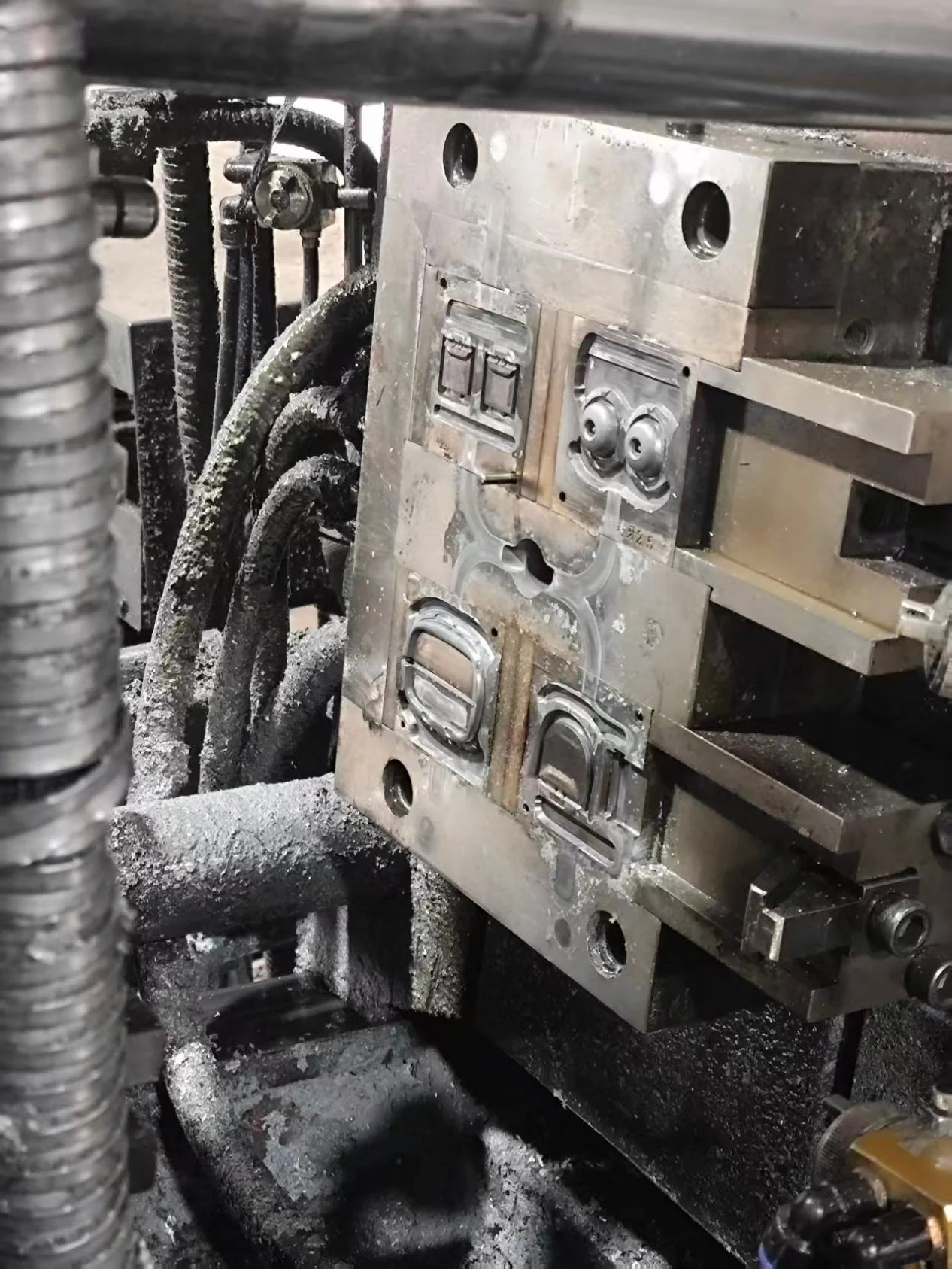
Install the mold, test the machine, and then press out the decorative buckle rough blanks.

Mount the steel mold in the die-casting machine, set the parameters and run a trial before casting the blanks. At this stage the blanks should be bright, with no flow marks or pinholes.

Key Points of This StepPay attention to the surface condition of the blank during the forming stage.

04Sorting and sprue removal

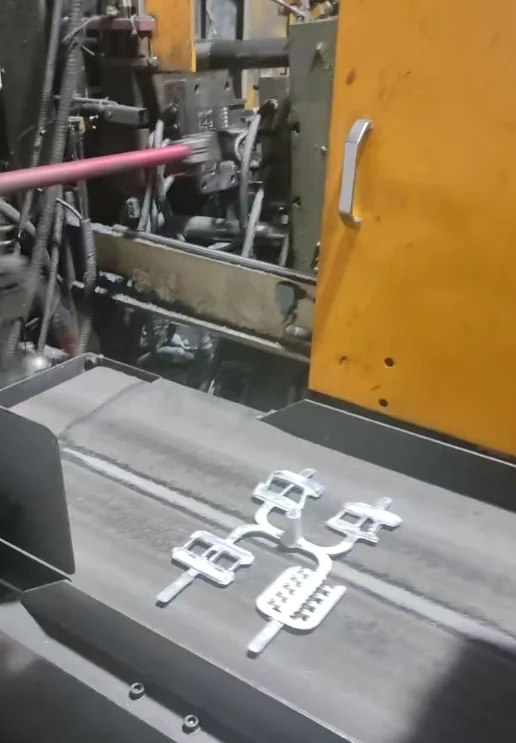
Separate the rough pieces one by one.

The cast parts are still joined to the sprue. Longde separates and sorts the clasps by hand to reduce distortion and scratches caused by impact during sprue removal.

Key Points of This StepRemove the sprue without damaging the blanks.
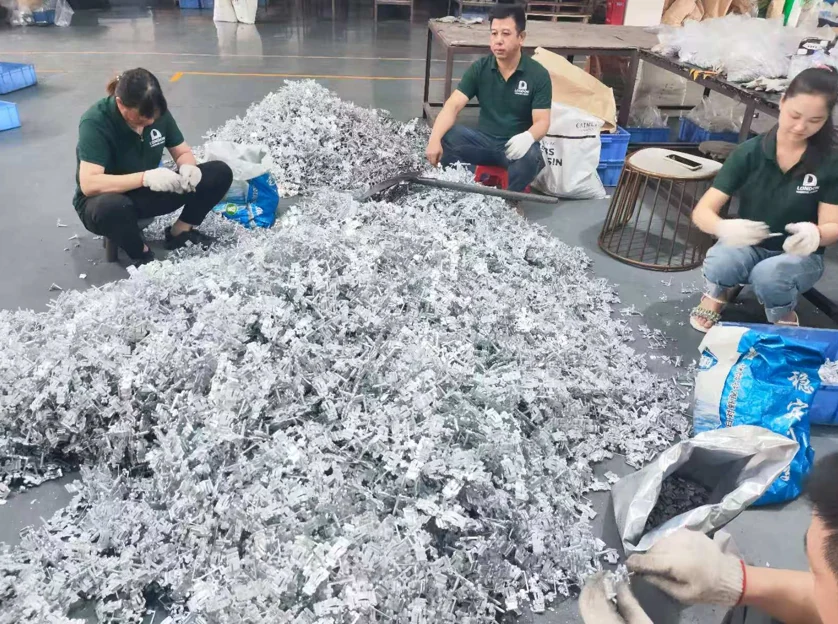
Staff members sat around a large number of die casting rough parts, manually sorting and separating the sprue.
Longde operators sort blanks and remove sprues by hand

First, tidy up the edges.
Polish the texture of the surface further.

After forming, the burrs on the grinding process are removed, and the joint lines are polished to refine the surface. Then, manual processing is carried out according to the structural requirements.

05Grind off burrs.

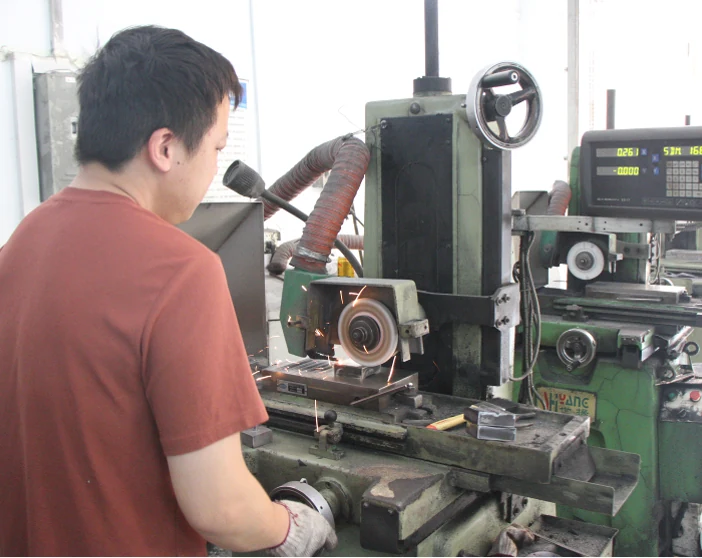
Smooth out the edges and the mold closing lines.

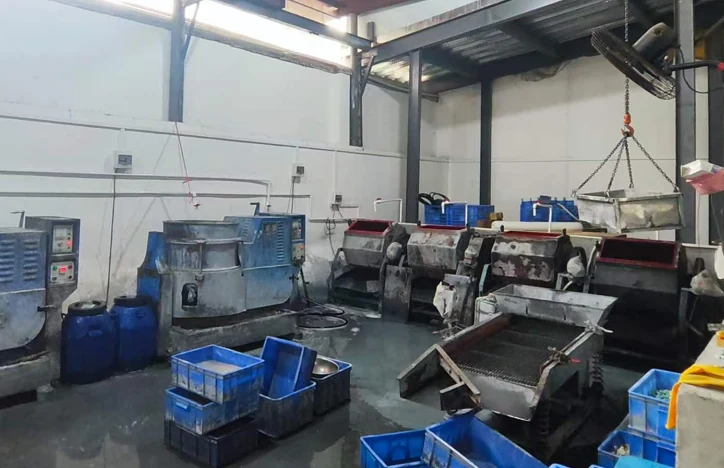
Choose grinding stones of appropriate size, mix them with grinding fluid, cleaning agent, and water, and roll them along with the decorative buckle rough blank to remove burrs and rough edges, making the surface of the decorative buckle smooth and shiny.

Key Points of This StepRemove any remaining shaping residues, and tidy up the surface and edges.

Grinding equipment and blue material transfer boxes within the grinding area
Grinding Equipment and Transfer Areas

06Polishing and finishing

From rough texture to delicate luster.

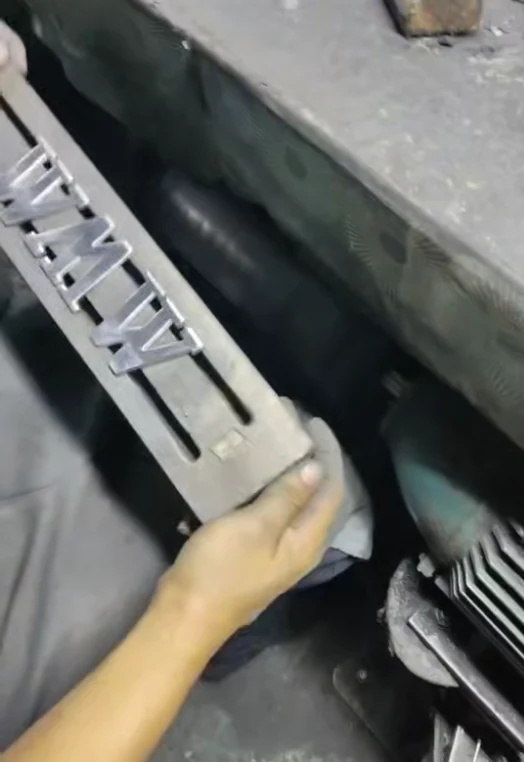
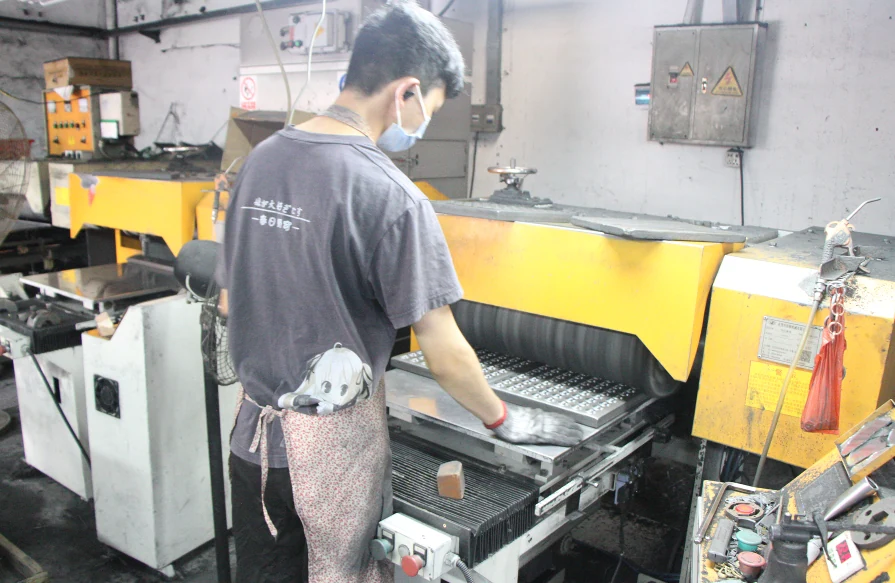
The workers at "Longde Hardware" carefully arrange the decorative buckle blanks on the templates. First, they use a polished grinding wheel to roughly smooth the surface along the mold lines. Then, they switch to a polishing cloth wheel to further polish the surface, aiming for a mirror-like shine.

Key Points of This StepFirst, rough out the surface, then refine the surface with a cloth wheel.

07Handcrafted

Install the accessories with their functions.

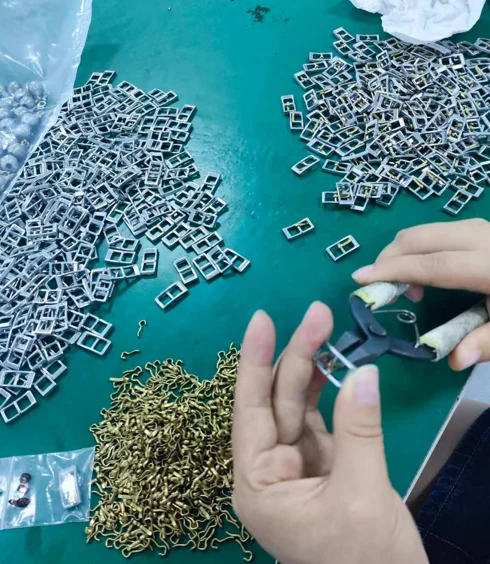
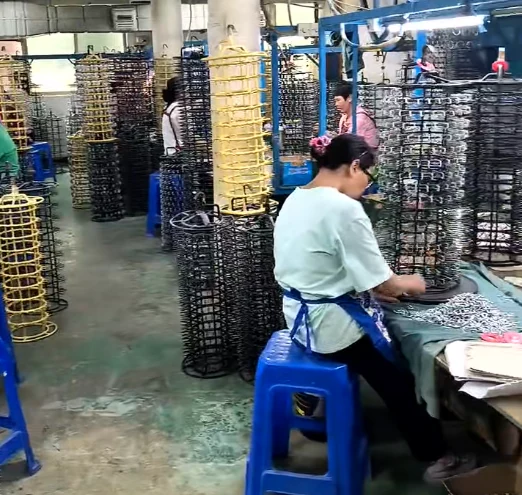
Processing steps such as threading, drilling, and pressing are carried out according to the product structure. The photo shows the scene of using manual tools to process small fasteners. The specific processing steps depend on the structure of the decorative fastener.

Key Points of This StepThe processing and assembly required to complete the structure.

The staff at "Longde Hardware" use hand tools to process and assemble small fasteners. The workbench is filled with frames and golden accessories.
The staff of "Longde Hardware" are engaged in the manual processing of small fasteners.

08Electroplating and Protection

From hanging, wax removal, to coating and protection.

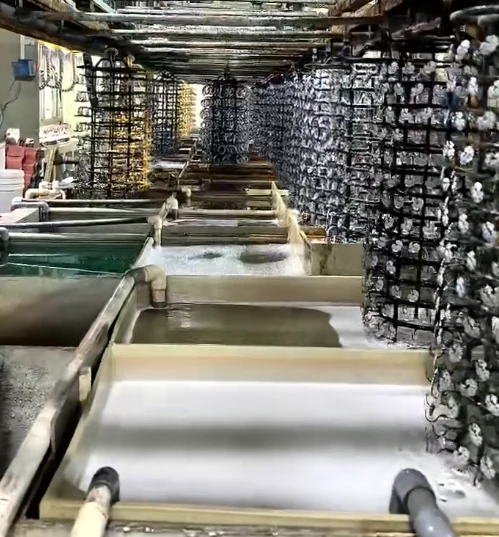
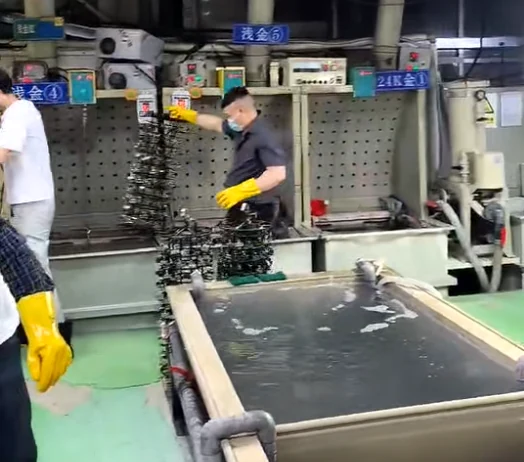
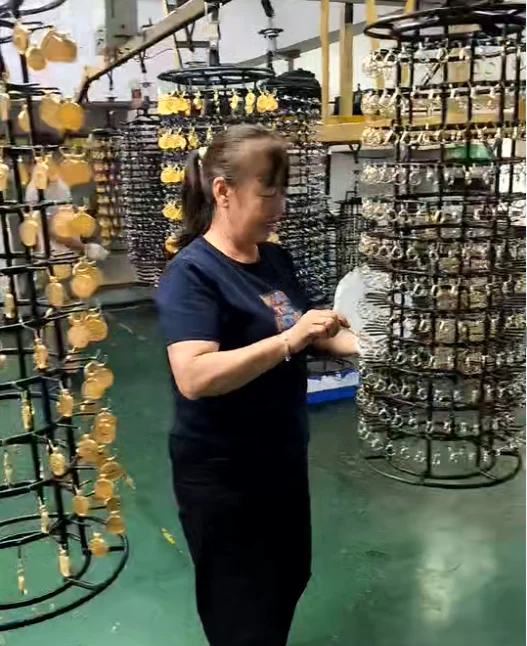
Manually, each decorative button is attached to the hanging device. Then, ultrasonic cleaning is used to remove the polishing wax from the surface. After that, pre-treatment for electroplating and copper base treatment are carried out. According to the process requirements, gold plating is applied, followed by air-drying and inspection for electroplating quality.

Apply a heat-cured clear protective lacquer and bake it in an oven. Then separate the clasps and protect them with foam before inspection and packing.

  1. HangingFix each piece separately
  2. wax removalUltrasonic cleaning
  3. ElectroplatingPre-treatment and Plating
  4. inspectInspect the quality after air-drying
  5. ProtectionGreat oil and baking
  6. SeparateFoam cotton protection

09Quality Inspection Packaging

Inspect each item individually and then protect them separately.

After a full examination, pearl cotton will be used to be used as an independent packaging to reduce collisions and scratches in transport.

surface
Check for scratches and electroplating bubbles
Structure and Function
Check the integrity and functional status
Packaging
Separated by pearl foam, each item is protected individually.
The staff of "Longde Hardware" examined the surface up close, holding the decorative buckles, with decorative buckles and separating packaging materials placed around them.
Inspect each item · Check surfaces and details